
What is the Witch Wound? How Fear of Judgment Blocks Creativity.

I once hosted an event in my home, and one of the women who came noticed the crucifix on my wall, the holy water font by my door, and the icon in my hallway. At first I thought her questions came from genuine curiosity, but soon, it felt more like an interrogation.
I tried to explain that these were gifts from my aunt and my grandmother, who have both passed away. But before I could finish, she loudly announced in front of the other guests, "The spirit is not right in your home. She hurried out, looking afraid.
I felt embarrassed and ashamed. An evening that I had spent hours preparing for and looking forward to suddenly felt horrible. These objects she pointed out have deep meaning to me. They carry my family’s memories and are connected to the way I practice my Christian faith. Yet for a moment, one person’s "discernment" had me doubting whether they were displeasing to God.
That’s how fast it happens. One person’s fear, and I was ready to take down what my aunt and grandmother had given me. When someone makes us feel like the odd one out, our survival instinct says to blend in, and we start rearranging our homes, our beliefs, and our voices around their discernment and measuring stick. And that instinct to play it safe follows us into our writing, our music, and our work. It may even be what’s keeping you stuck.
The “Witch Wound”
Think about the song you haven’t released, the intuitive gifts you’ve been holding back, or the next step in your creative business you keep putting off because you worry about what people will think.
Creative blocks have many roots. Some go back to childhood, and some even further. Your parents may have laughed when you sang, or you may have grown up hearing that making art wasn’t a worthwhile use of your time. Maybe you’re waiting for your work to be good enough to share. experiences
These experiences could have created a fear that expressing something "out of the norm" could cost us our belonging, or cause physical or emotional harm. Some people call this the “witch wound”, a carried-over fear from the witch trials. A phrase used to describe the fear of being judged, rejected, or punished for sharing your perspective, exploring your intuitive gifts, or simply being your quirky self.
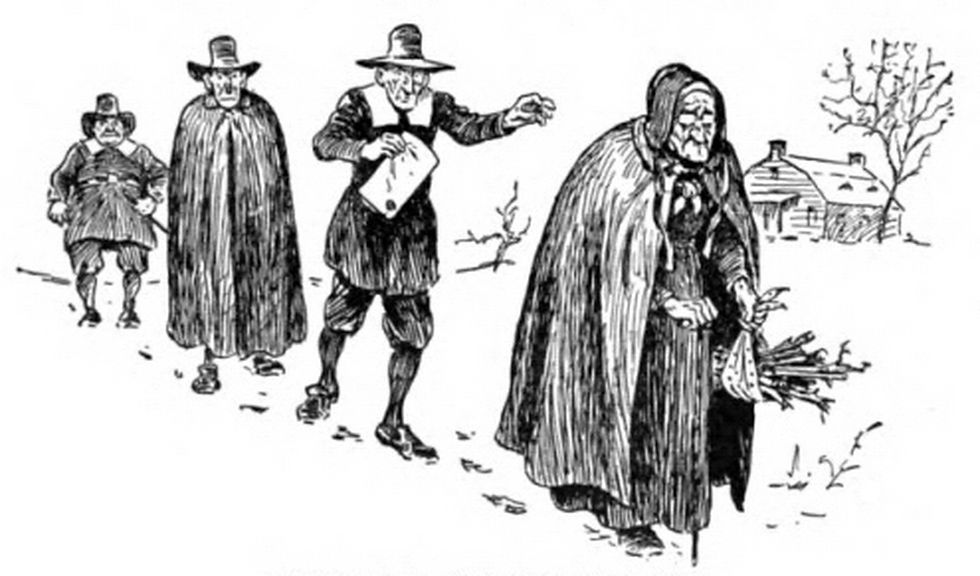
I’m not claiming every creative block traces back to the witch trials. What interests me is how messages about safety and belonging travel through generations of families, religious communities, and culture. We hear what happens to people who step outside the lines, and we learn to be cautious, sometimes overly cautious.
For Christian creatives, this may feel like wanting to create a piece of artwork, explore ways to worship, or share an experience of God, and then wonder whether someone will question your faith. Before you’ve even started, you shut yourself down.
The Witches Weren’t Who I Pictured
When I used to think about witches or read about the witch hunts in Salem, I imagined the witches from childhood stories: strange women living in caves, casting spells and mixing potions. But the real history surprised me.
The people who were accused in Salem in 1692 were mostly Christian women. Rebecca Nurse was a devout, respected older woman, and Martha Corey was a full church member. 1 Whether the outspoken woman, the healer, or the widow, it came down to Christians accusing other Christians.
When Staying Quiet Starts to Feel Safer
Even though the witch trials are long over, most of us still carry some knowledge of their message. The witch trials give us a powerful picture of how we can be influenced to stay small and quiet even if we are not afraid that being different or outspoken would lead to our death.
There may be more going on inside of you holding back your next creative project than a lack of discipline or confidence.

When Fear Sounds Like Discernment
It troubles me that accusations of witchcraft still show up in some Christian conversations, including online. Someone’s unfamiliar practice or way of expressing faith can become grounds for “exposing” and accusations before anyone takes the time to be curious, ask questions, and get to know the person.
As Christians, we are indeed called to discern. First John 4:1 tells us to test the spirits. But we are called to act in love, kindness, and humility. Galatians 6:1 calls for gentleness, and James 1:19 reminds us to be quick to listen and slow to speak.
We can still take spiritual concerns seriously while asking honest questions, checking our assumptions, and treating people with dignity. Protecting people from real harm matters, and so does being careful about the harm our own accusations can cause.
Not everything spiritual that feels unfamiliar to us is evil. Sometimes discernment needs discernment.
Making Room For Your Voice Again
If any of this sounds familiar, start by getting specific about what you’re afraid will happen when you share your work.
Whose reaction are you anticipating?
What do you anticipate they will say about you?
Who in your life would be glad to see you share this?

And as you make room for your own voice, extend the same care to others. Get to know the person and their story before rushing to judgment.
As we keep tending our own hearts and our connection to Christ, we grow in the wisdom and courage to create and speak what we’ve been given. Not everyone will understand us, and that’s okay. We don’t need anyone’s permission to share what God has placed in us.
Keep Creating, Mandy Brooks P.S. Want support with what’s holding your voice back? I’m a creative coach, consultant, and RTT hypnotherapist, and I work with creatives who want to move through fear and start sharing their gifts. Explore ways to work with me →
Sources Salem Witch Museum, Rebecca Nurse Homestead ↩
Emerson W. Baker, The 3 Biggest Myths About the Salem Witch Trials, TIME ↩


Comments